Al Kareem Mosque
Chapter: Siyam ( الصيام)
What is Siyam ( الصيام)
Siyam ( الصيام) is an Arabic word. Its meaning is to fast. There are certain rules for fasting in Islam which are as follows.
1. One has to make intention that I am fasting today for the sake of Allah jalla jalaaluhu. You will specify which fasting you are performing. Such as if you perform the fasting of the Ramadan then you will make intention that you are performing the fasting of the Ramadan for the sake of Allahu tawala.
2. One has to refrain himself from eating, drinking, smoking and sexual intercourse from the Subah sadiq till sunset.
Fasting during Ramadan is compulsory for every adult muslim. If a traveler or a sick person fails to perform the fasting of Ramadan, he can fulfil this fasting afer Ramadan when the traveler returns at home and when a sick person heals.
Fasting is prohibitted in 5 specific days a year:
Eid al-Adha and three days following it
Eid al-Fitr
After the fasting of Ramadan one can perform fasting except the above 5 forbidden days that will be considered as additional ( نفل ) fasting.
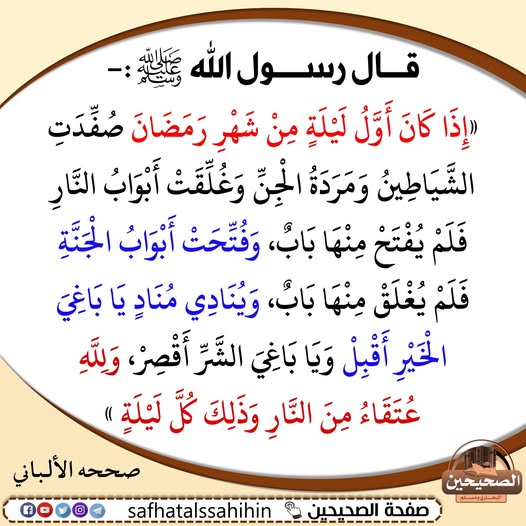
The doors of hell are closed and the doors of the heaven are opened at the first night of Ramadan
قَالَ رَسُوْلُ اللهُ صَلَّي اللهُ عَلَيْهِ وَسَلَّمَ :
إذا كان أولُ ليلةٍ من شهرِ رمضانَ صُفِّدتِ الشياطينُ ومردةُ الجنِّ وغلِّقتْ أبوابُ النارِ فلم يُفتَحْ منها بابٌ وفتِّحَت أبوابُ الجنةِ فلم يُغلَقْ منها بابٌ وينادي منادٍ يا باغيَ الخيرِ أقبِلْ ويا باغيَ الشرِّ أقصِرْ وللهِ
عُتَقاءُ من النارِ وذلك كلَّ ليلةٍ
المصدر: هداية الرواة ;
الراوي: أبو هريرة ;
المحدث: ابن حجر العسقلاني ;
خلاصة حكمه: [حسن كما قال في المقدمة]
Meaning:
The Prophet ( صَلَّى اللهُ عَلَيْهِ وَسَلَّمَ) said:
"When the first night of Ramadan arrives, the devils and rebellious jinn are chained up, the gates of Hell are closed and none of them are opened, and the gates of Paradise are opened and none of them are closed. A caller calls out: ‘O
seeker of good, come forward! O seeker of evil, hold back!’ And Allah has people whom He frees from Hell every night.”
Source: Guidance of the narrators;
Narrator:Abu Hurairah;
The narrator: Ibn Hajar al-Asqalani;
Summary of his ruling: [Good, as he said in the introduction]
The persons who fast will enter into the heaven through the gate named Rayyan:
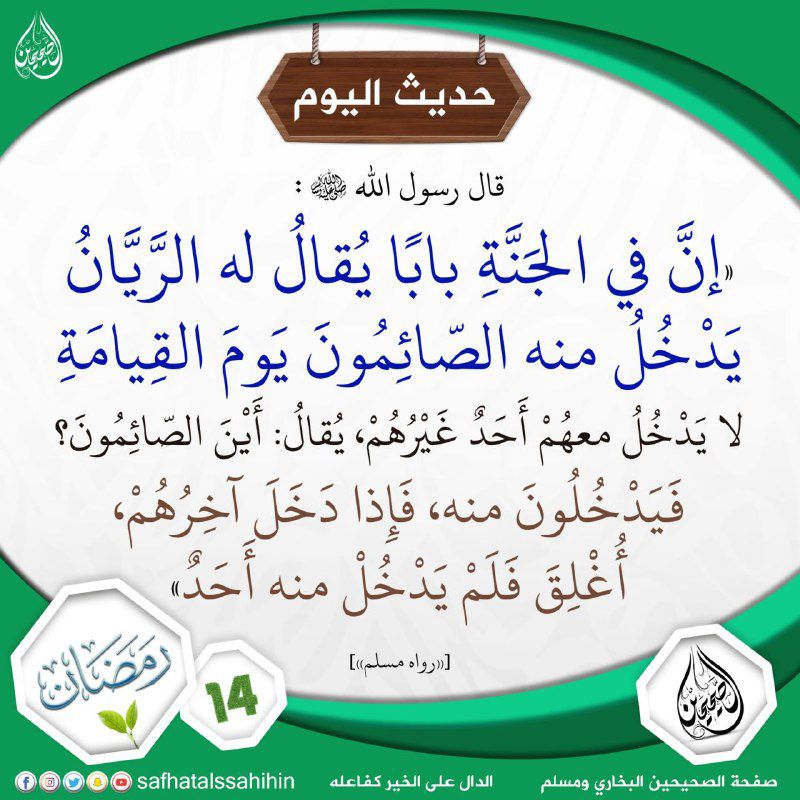
عَنْ سَهْلِ بنِ سَعدٍ رَضِيَ الله عَنْهُ عَنِ النَّبِيِّ صَلَّى اللهُ عَلَيْهِ وَسَلَّمَ قَالَ: (إِنَّ فِي الجَنَّةِ بَابًا يُقَالُ لَهُ الرَّيَّانُ، يَدْخُلُ مِنْهُ الصَّائِمُونَ يَوْمَ القِيَامَةِ، لاَ يَدْخُلُ مِنْهُ أَحَدٌ غَيْرُهُمْ، يُقَالُ: أَيْنَ الصَّائِمُونَ؟ فَيَقُومُونَ لاَ يَدْخُلُ مِنْهُ أَحَدٌ غَيْرُهُمْ، فَإِذَا دَخَلُوا أُغْلِقَ فَلَمْ يَدْخُلْ مِنْهُ أَحَدٌ)
رواه البخاري ومسلم
Meaning:
On the authority of Sahl ibn Sa'd, may Allah be pleased with him, that the Prophet ( صَلَّى اللهُ عَلَيْهِ وَسَلَّمَ) said: "Indeed, in Paradise there is a gate called Ar-Rayyan, through which those who fast will enter on the Day of Resurrection, and no one will enter through it except them. It will be said, 'Where are those who fast?' Then they will stand, and no one will enter through it except them. When they have entered, it will be closed and no one will enter through it.
Narrated by Al-Bukhari and Muslim
Intention of fasting
Niyyah ( نِيَّةٌ ) of fasting during Ramadan:
I am making an intention to fast an obligatory fasting for the sake of Allah today.
Annotation:
Niyyah ( Intention ) is a fundamental aspect of the practice, particularly in Islam. It is essential for the validity and reward of the fast. without the correct intention, fasting becomes merely abstaining from food and drink rather than a spiritual devotion to Allah. The intention can be made in the heart or expressed verbally, and it signifies a commitment to fast for the sake of gaining Allah's acceptance.
One can make Niyyah for Ramadan fasting or any addition fasting at the late night or in the morning or at least before noon.

Sahoor ( السحور )
1. For performing fasting to have food before subah sadiq is called Sahoor. The best time to have sahoor is the last one-sixth part of the night. To take sahoor is sunnah. If a person takes some food or drinks as sahoor for performing fasting, he will get the blessings and rewards of having sahoor.
If somebody performs fasting without having sahoor, his fasting will be perfect and accepted. But he will be deprived of the rewards and blessings of having sahoor.
2. Subah Sadiq:
It is an Arabic word. Subah Sadiq (Pre-dawn) is when the time of Fajr enters. The end time of Sahoor is at the time of Subah Sadiq. When Subah sadiq appears eating and drinking is not allowed as you want to fast. As a precaution, all eating must stop at least 5 minutes before subah sadiq.
3. Sahoor:
It is an Arabic word. The food eaten for fasting before Subah sadiq is called sahoor.
Having Sahoor is a way to get blessings and rewards
قَالَ رَسُوْلُ اللهُ صَلَّي اللهُ عَلَيْهِ وَسَلَّمَ تَسَحَّرُوْا فَاِنَّ قِي السَّحُوْرِ بَرَكَة – رواه البخاري و مسلم
The messenger of Allah jalla jalaaluhu said, Have sahoor, because there are blessings in having sahoor.
- Bukhari and Muslim
Iftar
Iftar ( افطار ):
Iftar is the evening meal Muslims eat to break their fasting after sunset during Ramadan or any other day when they fast, marking the end of daily fasting. If someone eats before sunset his fasting will not be accepted. One must eat Iftar after sunset. So one can eat Iftar after 1 or 2 minutes after sunset to avoid any doubt about sunset. It is better ( مُسْتَحَبّ ) to break fasting with dates because there is blessing in dates. If there is no dates, one can break his fasting with water because water is purifier. Though it is legal to break fasting with any halal food. Dua is accepted before Iftar. So one should make dua before Iftar.

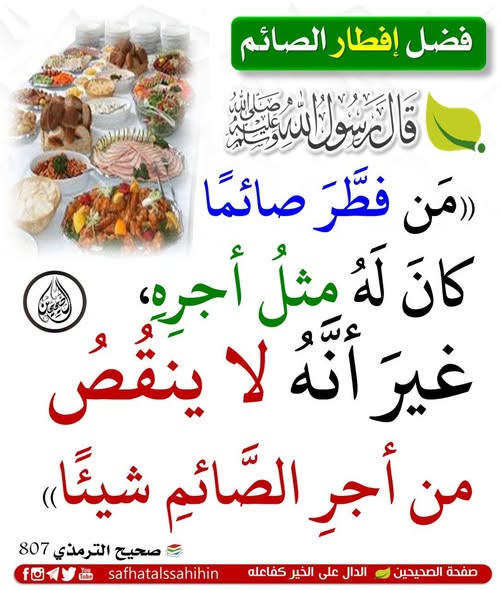
The person who entertains a fasting person when he takes iftar gets the rewards like a fasting person
قَالَ رَسُوْلُ اللهُ صَلَّي اللهُ عَلَيْهِ وَسَلَّمَ :
مَن فطَّر صائمًا كان له مثلُ أجرِهِ، غير أنه لا يَنْقُصُ من أجرِ الصائمِ شيئًا
رواه أحمد برقم: (17033)، والترمذي برقم: (807)، والنسائي في الكبرى برقم: (3317)، وابن ماجه برقم: (1746)، من حديث زيد بن خالد الجُهَني -رضي الله عنه-. صحيح الجامع برقم: (6415)، صحيح الترغيب والترهيب برقم: (1072).
Meaning:
The Prophet ( صَلَّى اللهُ عَلَيْهِ وَسَلَّمَ) said:
The person who entertains a fasting person when he breaks fasting will get rewards like him ( like the fasting person ), without reducing any reward of the fasting person.
It was narrated by Ahmad, No. (17033), Al-Tirmidhi, No. (807), Al-Nasa’i in Al-Kubra, No. (3317), and Ibn Majah, No. (1746), on the authority of Zaid bin Khalid Al-Juhani - may God be pleased with him -.
Sahih al-Jami’ No. (6415), Sahih al-Targhib wa al-Tarhib No. (1072)